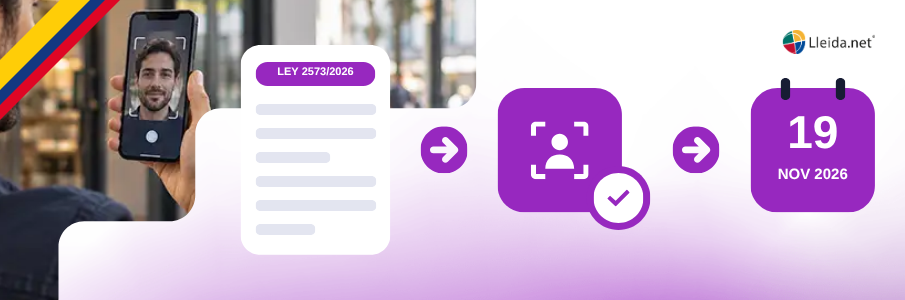
Law 2573 of 2026: What Companies Doing Business in Colombia Must Prove by 19 November
If you do business in Colombia, in telecoms, banking, fintech or any business that sells on credit, a new law changes what you must be…
If you do business in Colombia, in telecoms, banking, fintech or any business that sells on credit, a new law changes what you must be…
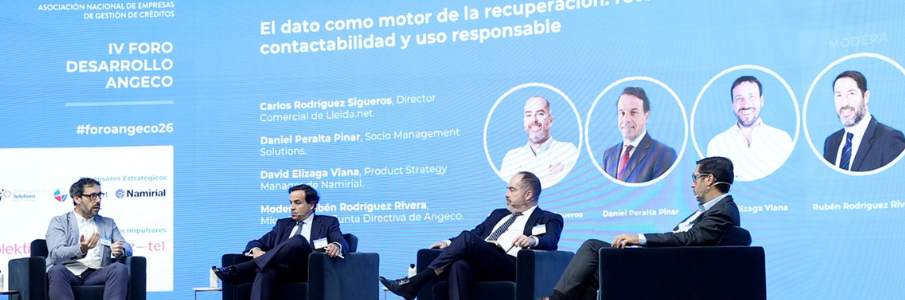
We’ve all heard the cliché: “Data is the new oil.” It sounds great in a presentation, but it falls apart the moment you actually have…

Digital authentication is no longer just about convenience; it is about survival. Managing customer onboarding, contracts, or remote transactions online requires a shift in strategy,…

Verifying a customer’s identity — known as Know Your Customer or KYC — has become a crucial step for building trust between businesses and their…

According to the report’s findings on the status of fraud in Spain edited by the Association of Spanish Companies Against Fraud, fraud attempts have increased in the last year. At the same time, identity theft is the most reported type of fraud. Consequently, it is recommended for companies to use digital identity verification to avoid losing money and falling victim to scams, thereby risking their reputations. This post will talk about how you can perform digital identity verification securely.

Validating the identity of a client and verifying their solvency is a necessary process for any company that sells products and services. This process is called due diligence and it is directly related to KYC (Know Your Customer) or and KYB (Know Your Business) processes.

Online transactions requiring a person to be identified are commonplace in the day-to-day operations of any company. Digital identification has become essential for organisations to transform digitally and to compete fairly. This post will tell you what digital identification is, how it works, what advantages it brings, and which sectors use it the most.
Internet evolution has made digitalisation grow a lot, but the rise of new online frauds has accompanied this development, so security is a must, and trust services are there to guarantee security. In this post, we tell you about what they are and what they do.
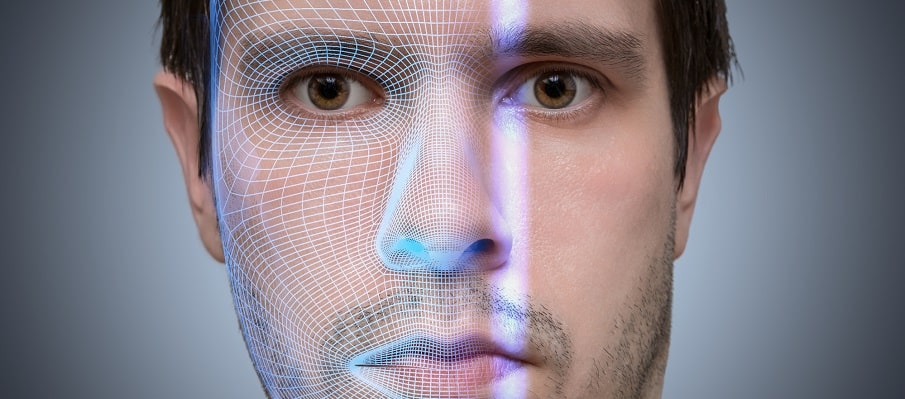
With the development and use of new technologies, different methods of fraud have also spread in the identification of individuals concerning their interaction with other companies or individuals. Security is a fundamental element for companies such as banks and telecommunications companies and customers, and biometric facial identification, among other trends, has become one of the leading methods. This post tells you what biometric identification is, the trends in biometric recognition and the most common applications of this technology.
Do you want your customers to be confident when they do business with you? We are all used to being prompted for a username and password when we log on to a website, but this identification method is not risk-free, and many companies have suffered cyber-attacks that have jeopardised the security of thousands of customers. Two-factor authentication can be used for additional security. In this post, we tell you what it consists of, how it is used and in what cases it can be used.

Technology has come a long way in recent years, and while this is generally a benefit, it also brings with it the appearance of digital risks. Many cases of known and not so well-known people have seen their identity being impersonated on social networks or how fake videos were created in which they made statements that they had never made. This is what is known as deepfake. In this post, we tell you about what risks can arise in people identification processes or customers for your company and how they can be solved.
Until recently, when a company received a hard copy printed invoice or in digital format and wanted to include it in a corporate tool, it had to be done manually. With OCR technology, written texts will automatically be converted into a digital format to be easily managed. This post tells you what this technology consists of, how it can be used, and its benefits.
We are increasingly making Internet transactions such as bank transfers, purchases or service contracts. For these transactions, the digital identity must be verified correctly to know that a person is the one who claims to be and to avoid identity thefts. That’s why there’s an increase among companies in using safer means of identification that give customers confidence while preventing fraud.
If you are using email for your company’s marketing actions, you must check that these addresses to be real. In this post, we tell you how to validate an email and avoid bounced emails that may affect the statistics of your marketing campaigns.
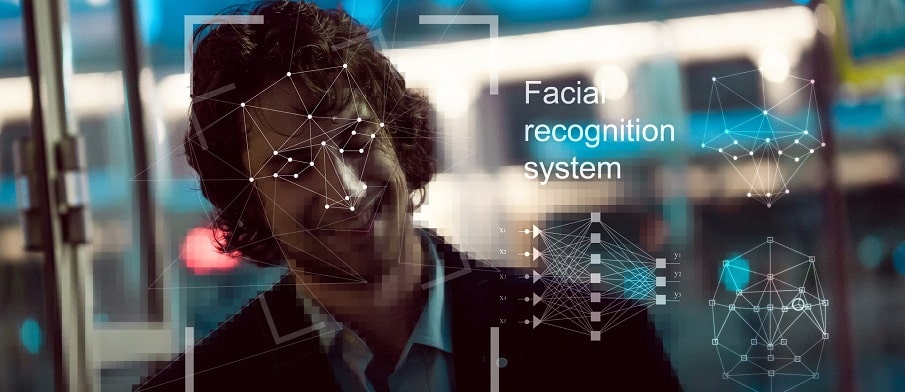
If you are not yet using video identification in your contracting processes in your company, you are wasting time and maybe money as well. This post tells you what eKYC (electronic Know Your Customer) technology consists of, which sectors use it, why, and how it works.

The digital transformation of companies is moving forward due to changes the way of working and one of the most obvious effects has been the digitization of processes and, among others, of document signing processes (contracts, authorizations, etc.). In this sense, according Lleida.net, the use of electronic signatures increased by 598.81% compared to June 2020- 2019 and by 609.44% compared to December 2020 , with December 2019. This means that the electronic signature is used in a large number of documents and in documents with increasing economic importance, so that security becomes essential. In this post we are going to talk about the difference between authentication and identification so that you know how to recognize a secure electronic signature.

Do you want to expand your company using cutting-edge technological solutions? If yes, you should know how the electronic signature works and the ease with which processes can be streamlined into your company.
Our tool, eKYC, has been proved as a secure remote identification platform. This post will help you find out its mains advantages. Digital life gives…

You William Blake?”asks one of the two Marshalls, pointing him with a gun, in one of the most famous scenes of Jim Jarmusch’s movie, Dead…